
Archived Orders Tab – Overview
The Archived Orders tab contains orders that have been closed, finalized, or moved out of active operational workflows. These orders are read-only and retained for record keeping, reporting, and audit purposes.
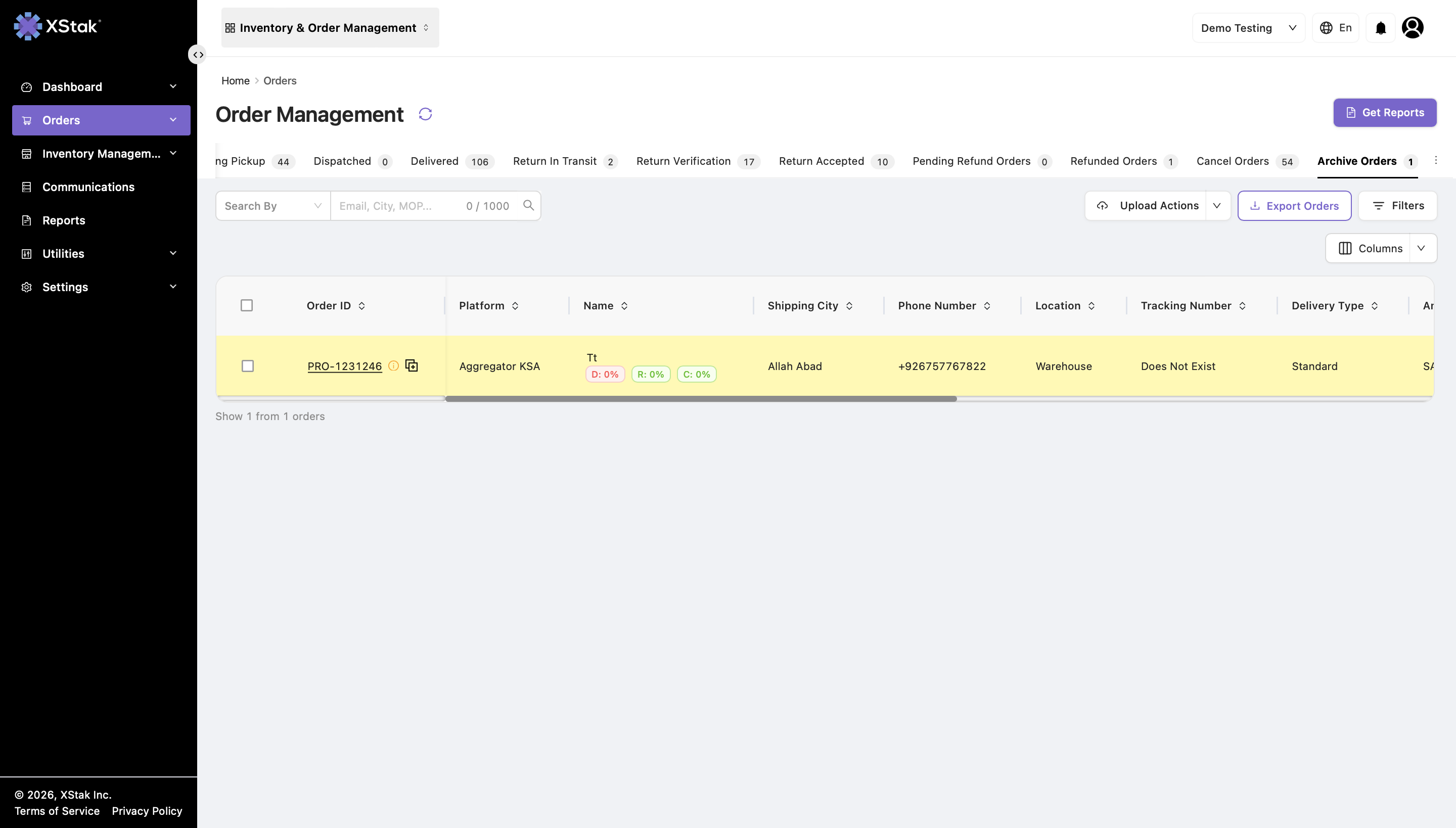
This tab helps teams maintain historical order data while keeping active operations clean and focused.
1. What is an Archived Order?
An archived order is an order that has completed its full lifecycle or has been intentionally moved out of active processing.
These orders are no longer part of operational workflows such as processing, shipping, or cancellation handling.
2. When Orders Move to Archived Orders Tab
Orders move to the Archived Orders tab in the following cases:
-
The order has been successfully delivered and fully completed.
-
The order lifecycle is closed after fulfillment and reconciliation.
-
The order is manually archived for record-keeping purposes.
-
The system moves completed historical orders for cleanup and performance optimization.
3. Features Inside the Archived Orders Tab
|
Feature |
Description |
|---|---|
|
View Archived Orders |
Displays all finalized and closed orders. |
|
Order Details View |
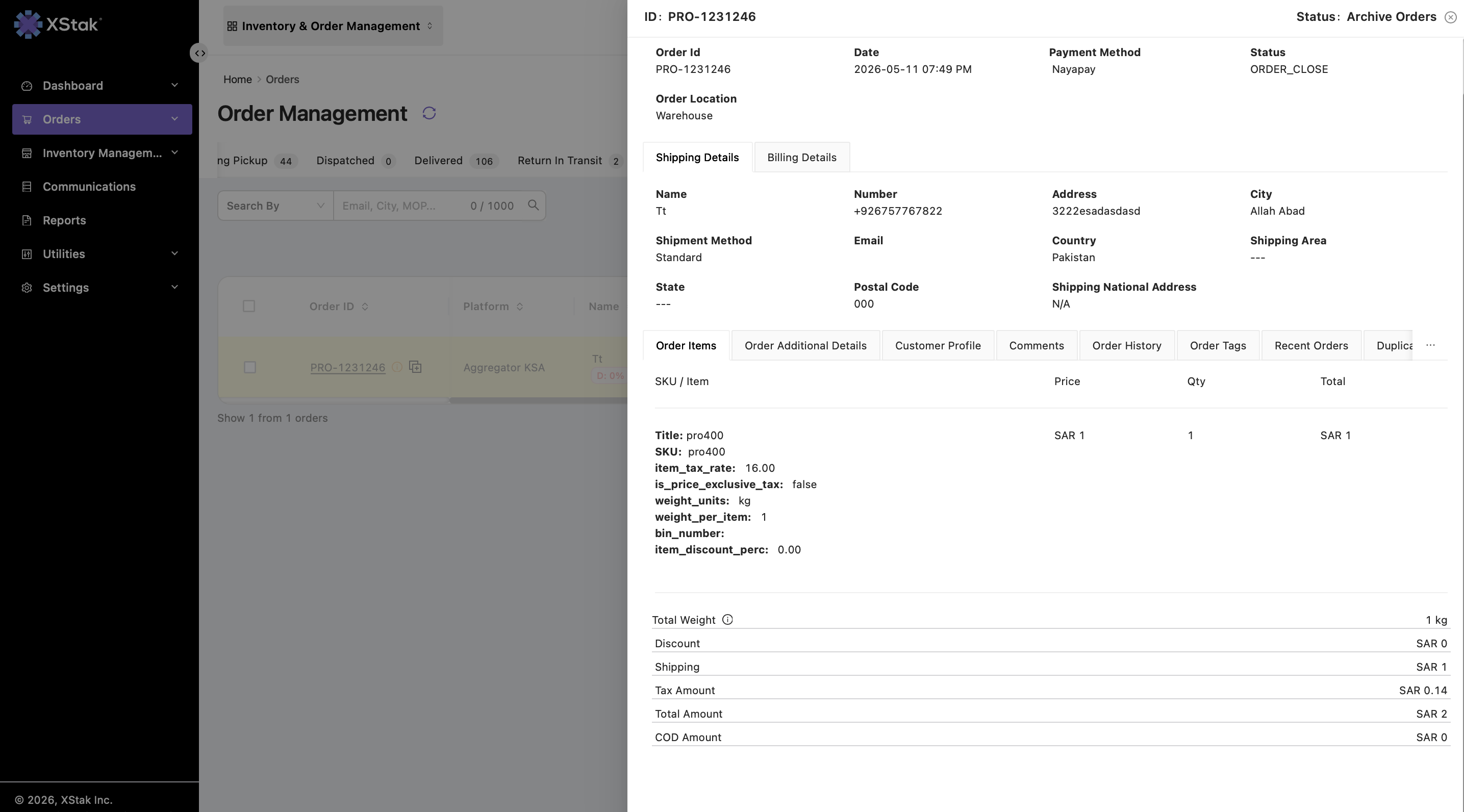
Shows complete order information, including Order ID, SKU, customer, timeline, and status history. |
|
Search and Filter |
Filters orders by date, order ID, customer, or SKU. |
|
Read-Only Access |
Prevents archived orders from being edited or updated. |
|
Audit Reference |
Supports reporting, audits, and historical tracking. |
4. How to Use the Archived Orders Tab
-
Go to the Archived Orders tab from the OMS menu.
-
Search for the required order using the Order ID, customer name, or filters.
-
Click any order to open the Order Details View.
-
Review the full historical information, including status changes, timeline, and final outcome.
-
Use this data for reporting, audit checks, or dispute verification.
5. Important Notes
-
Archived orders are read-only.
-
No operational changes can be made once an order is archived.
-
This tab is strictly for history and reference purposes.